Tag: performance

  • Members Only: Flo Kasearu at the Performa 17

    Members Only: Flo Kasearu at the Performa 17

    Ernest Hemingway once said, “In every port in the world, at least two Estonians can be found”. This is also true about New York, where more than a few community members share their Estonian House, New Yorgi Eesti Maja. The New York Estonian Educational Society was founded in 1929.  As a great coincidence, and as a brilliant and thoughtful part of the Performa 17 biennial, which took place from November 1 to 19, Estonian artist Flo Kasearu created a nostalgic ode to this members’ club house. Her site-specific performance tour guided groups through different rooms of the house. Her artist-led tour highlighted the very house’s past, changing its authentic traditional feeling into an updated stage, in which the local members themselves took part in the performing. All staged and directed by Flo Kasearu.

    Kasearu runs also an artmuseum in her native Estonia. In Tallinn, visitors can book special guided tours in the Flo Kasearu House Museum. The historic wooden house belonged to the artist’s family from the time of its construction.
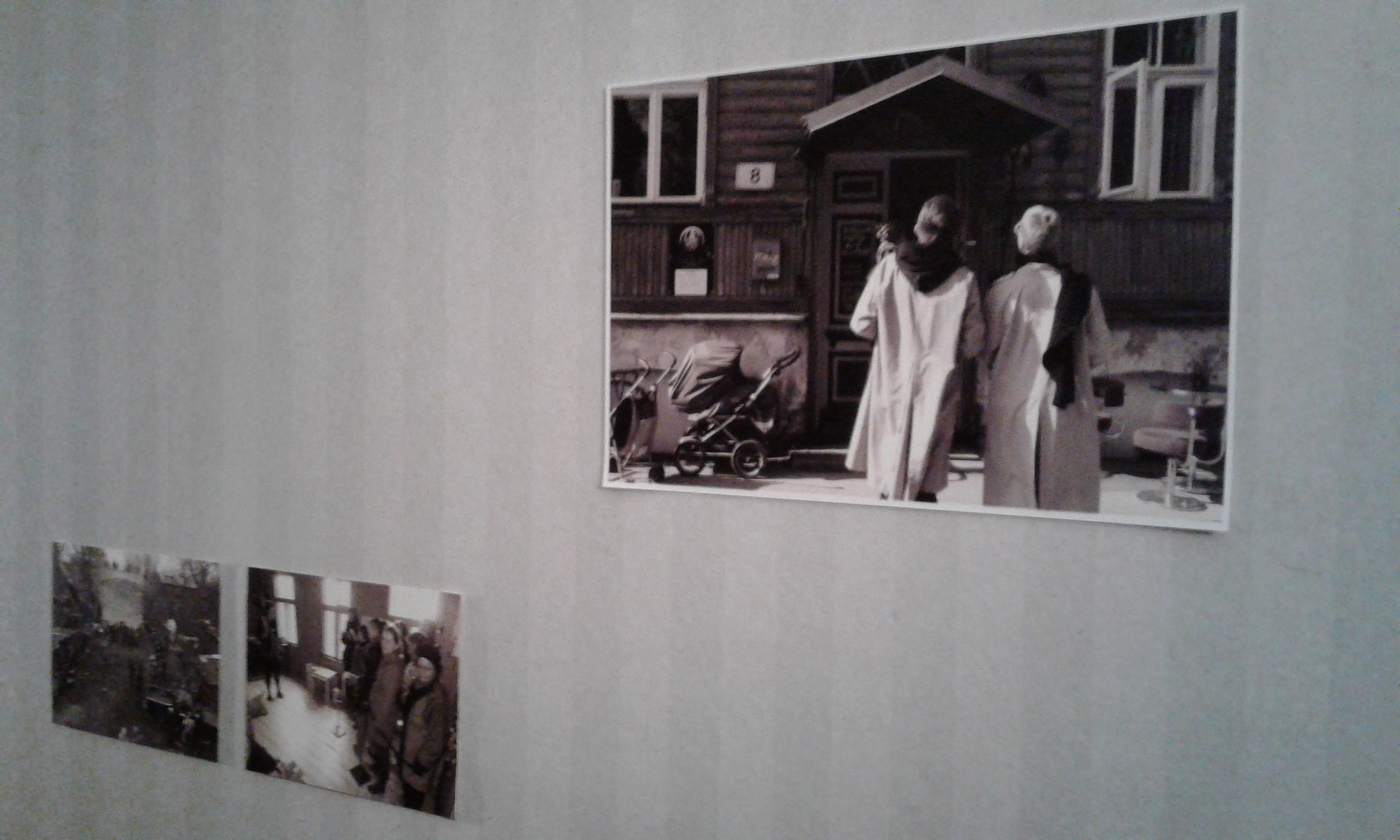
    Flo Kasearu's House in the family history pictures.
    Flo Kasearu’s House in Tallinn in the family history pictures as shown in the New York Estonian House performance, Performa 17.

    Firstindigo&Lifestyle: Your great great-grandmother was building the house in which you live now in Tallinn. How did that heritage inspire you to pick up the idea of bringing performative component of your family house to New York Estonian House?

    Flo Kasearu: Both of my great great grandparents built the house. (I just have a photo of my great grandmother, so I mentioned her in the tour).

    While living there since 2009, and getting involved with so many domesticity issues and problems of living in an over 100-year-old house, many ideas have grown out of the problems. I like to solve my problems through artistic practice, turning them into objective artworks. So I established a Flo Kasearu House Museum in the house, which is open by appointment only. I do guided tours to visitors through the house and its garden. Otherwise it would be difficult to find artworks from the middle of my everyday things.

    The house tour is a sight-specific art project, and as such it’s difficult to transport it elsewhere. I can partly exhibit the tour, or works from it somewhere else.
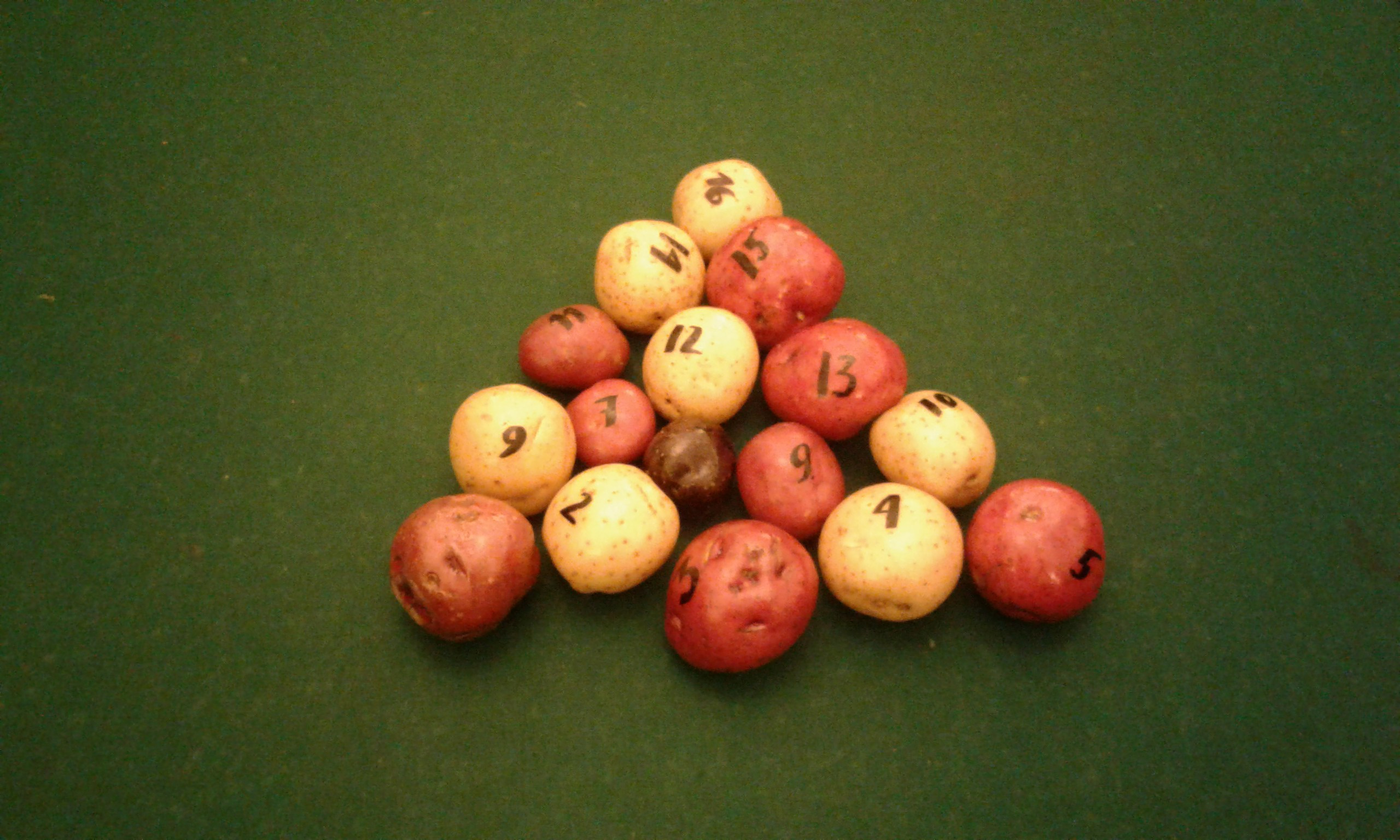
    Flo Kasearu_installation view at the Estonian House.
    Flo Kasearu, Installation view at the Estonian House, staged in the social room ‘potatoes as billiards’, Performa 17.

    Firstindigo&Lifestyle: How long ago was it when your family built the house, and how did Tallinn preserve its old buildings during the times of the Soviet Union?

    FK: The house was built in 1911 and my museum and the tours started in 2013.

    During the Soviet era, most of the private property was nationalised and belonged to the state. After 1991, 20 year-long restitution started taking place, during which the property was given back to successors of original lawful owners. Houses that belonged to the city were taken care by the renters. City of Tallinn, for example, did not put any money into renovating them. During the restitution process houses were in a legal loophole in terms of their ownership, and thus were not dealt with by the renters, as they thought that any original lawful owners could come back and take the houses over.

    Flo Kasearu Performa-project at Estonian House.
    Performer doing kissing sound experiments at the Flo Kasearu tour in the New York Estonian House.

    Firstindigo&Lifestyle: How did you end up doing a similar kind of tour in New York at the Estonia house as part of Performa 17?

    FK: Just the method of being a tour guide is the same anywhere, and talking about the history of my museum house is also the same. But otherwise it is a very different project.

    ‘The Members Only tour’ (Performa 2017 project), is a sight-specific work for New York Estonian House and its community. As I am not a big performer, I did not want to perform it on stage. So doing the guided tour seemed a logical method. The work also included the community members participating in the performance. Guiding people to go through the house, and then becoming like a tour guide in a museum which New York Estonian House is in a way. Everything in the house looks so authentic to its original times and everything is based on old traditions and rituals.

    Firstindigo&Lifestyle: Do you feel that NYC local community members joined your project easily? From an audience member viewpoint everything seemed going smoothly and appeared well rehearsed.

    FK: I took the time to talk with them, listen their stories, so then it was not too difficult to convince them to join. I got recommendations from one member to talk to another member, and then it developed on until I had enough members to invite. I had two ladies cancelling in a last-minute, for example an older lady’s husband got so sick that she had to take care of him and she could not join in the end. But luckily I had also backup members in mind.

    Firstindigo&Lifestyle: You’re a multidisciplinary artist in the true sense. Did performance enter into your working methodology from the very start of your practice?

    FK: I started doing video-performances while I was an exchange student in UDK, Berlin. I was in Rebecca Horn studio, a performance and installation artist, and she told me that there is no point for me to paint for her, as she doesn’t know much to comment on painting. I started doing video-performances, relating myself and my Eastern European identity with this new city and new space. So from that time I have been doing performances once in a while.

    Flo Kasearu_drawing, 2014.
    Flo Kasearu, drawing, 2014. Estonian House staircase presented drawings of the artist. Her fears of what could possibly happen to the house.

    Firstindigo&Lifestyle: In New York City, the visual components in ‘The Members Only’ tour were really stretching the context of the Estonian House in a unique way. How did the imagination for the ‘sets’ evolve?

    FK: They are a combination of ideas that evolve from speaking with people and wanting to bring them and their stories to this very abstract and minimal level. And mixing them with some of my older haunting ideas. It is very sight-specific. And I wanted to bring also humour and irony level in, as I felt this is really lacking in this house.

    Firstindigo&Lifestyle: Now thinking also how the music room was evolving, with the grand piano in it. In your tour, you mentioned that behind the doors there is a choir practice going on, but the scene was so surprising?

    FK: My point was not to repeat the same things that are happening in the house otherwise regularly. I went to see the choir rehearsal happening there, and I noticed the choir teacher who is such a strong character putting also chairs. So I wanted to highlight the choir teacher and show her alone. I have had this kissing-ticking sound long time haunting in my head and I thought to display this in the room as it is kind of abstraction from the emotions that I felt in the choir rehearsal.

    For example, in the choir singing room, instead of singing patriotic songs, the notes are made of this kissing-ticking, which has similar emotion and a character being nostalgic, but abstracted. And then the humor comes in, with over-reacting with this kissing note, and this way it’s also more open to interpretation.

    Flo Kasearu_the music room at the Estonian House.
    Flo Kasearu, The choir room transformed into an installation with kissing-ticking sounds at the Estonian House, Performa 17.

    Firstindigo&Lifestyle: Going back to Estonia. How would you describe the Estonian contemporary art scene today?

    FK: Its tiny but rather interesting. Some years ago art used to be dealing more with the social and political problems, now it is much more in its comfort zone. Although the fees in Estonian art are still quite minimal. The younger generation is more similar to Western formalistic approach, seems to me.


    Guided Tour of Flo Kasearu House Museum (compilation of excerpts) from Flo Kasearu on Vimeo.

    ***

    Artist website: http://www.flokasearu.eu/


  • Dance meets art at Loretta Howard Gallery

    Dance meets art at Loretta Howard Gallery

    Yvonne Rainer’s work Trio A (1966), is one of the most enchanting dance pieces of dance history that paved the way to contemporary and postmodern dance practices. It is an interesting choreographic work, not least because it is exhilarating from pure performance and performer points of view. How many times do contemporary performers get immersed in new projects, where choreographers and directors inquire effortless, non-virtuous task-oriented movements and behavior to use them as backbones for their pieces. This in fact is not so easy to accomplish at all. As what performer goes through is not so much about ‘performing’ from a merely audience seduction point of view, but follows more a neutral way of not-doing too much. This might sound complicated, but makes all sense when in dance the performers start tapping the space, letting their bodies organize the way through the space. The inheritance of this type of movement in dance, a meticulous way of appearing happens sometimes simultaneously in conjunction to things and objects. In sculptural and spatial terms, the dancer is like a living and moving human sculpture. But more than that, the art of dancing in this case is shaped also around imaginary objects, or spatial lines that cut through the architecture of space. In Trio A, it seems that the space and objects were a great source of inspiration for Rainer, acting as inner elements, and shaping the movement sequences. There are, of course, noticeable tricky movements and balancing included in the work, even when the dancer (herself in the original Trio A, which was part of a larger work The Mind Is a Muscle) would not make a full sequence of complicated turns, for example. In 1966, Trio A changed the dance scene by examining the possibilities of human movement. Rainer had learned from Merce Cunningham and John Cage to have different approach to the her audience or spectators in general. She also started to experiment with film using the same methods as in choreography.

    When watching the composition of Trio A evolve on the video, it comes to mind that perhaps the biggest challenge is to maintain a calm steady movement flow. The work became a classic not only because it still makes powerful statements of what a composition and a performance is about; but stating a strong performer making the composition. It changed so much in the Western dance history.

    Dance does not always get noticed among contemporary art forms, or is quite rarely placed in the art history like visual arts. When it appears to be paired together with and being a component of the visual arts as a performance art, or in conjunction of musical composition, it gets a different approach. The so-called post-modern dance era brought in new curiosities in terms of artistic collaborations that stretched beyond boundaries of different art forms and genres.

    Loretta Howard Gallery opens on September 10 with a new exhibition entitled “Where Sculpture and Dance Meet: Minimalism from 1961 to 1979.” The gallery curates annually an historical exhibition, and this truly interesting archival exploration showcases videos of historic performances and sculptures associated with minimalism both in art and dance. The exhibit is timely as it is doing homage to ideas that are still in a dialogue setting current trends in visual arts and performance. The exhibition shows that choreographers and sculptors, for instance, used methods of composition that were known as subjective. Yvonne Rainer belongs to these artists who brought minimalism to dance. She did not eventually wish to include her Trio A showing into the gallery exhibition, but her historic rehearsal recording from Conneticut with a group of performers works as a good intro to her style.

    In the exhibit, there is also a video of sculptor Robert Morris’ work,  in which a masked male performer performs with a sculpture created by Morris. In the 1960s, he built his early sculptures in Yoko Ono’s loft that also involved unique performance elements. Choreographer Simone Forti’s archival video of her piece Slantboard (1961), is an important addition to the exhibition. The work includes a platform in its center for performers to attach to and play with. The exhibit culminates around a piece Dance created by Lucinda Childs (original from 1979). The video is a double performance in a sense that Childs’ company performs in the background video when the Dance is recreated for stage. The choreography gathers an architectural sculpture from Sol LeWitt around it. Childs collaborated with the artist in set designs, and used music from composer Philip Glass.

    Andy Warhol’s installation of helium filled pillows, Silver Clouds, adds an interesting story to the exhibition. Warhol created the pillows which then functioned as a set in Merce Cunningham’s dance work Rainforest (1968). Performers in this choreography encountered the clouds when they were floating across the stage. Cunningham often explored dancers and objects to create ‘random’ encounters, so it is great that the exhibition’s shows a performance video and the sets in the gallery space to make the central point come across.

    In addition to the artists and collaborations mentioned, Loretta Howard Gallery displays Trisha Brown’s video Group Primary Accumulation (1973) as part of this archival display. The choreography explored altered understanding of the beauty and power with simple repetitive movements. Brown used principles of mathematics, modularity and repetition when composing the dance. Next to this video, there are minimalistic sculptures on the walls from Donald Judd, who created designs for some of Brown’s choreography. Then, a strong sculptural work is on display from Ronald Bladen.

    The exhibition “Where Sculpture and Dance Meet: Minimalism from 1961 to 1979”, is curated by Wendy Perron, who is the author of “Through the Eyes of a Dancer” and former editor in chief of Dance Magazine. It is co-curated by Julie Martin, who is an independent scholar and currently Director of Experiments in Art and Technology (EAT). The exhibit is on display from September 10 until October 31st, 2015 at Loretta Howard Gallery, 525-531 West 26th Street, New York.