• The magic of Hanji

    The magic of Hanji

    Re:visioning HANJI exhibition showcases artworks made from Korean traditional paper hanji.  Two artists, Ran Hwang and Aimee Lee, have each developed their own contemporary aesthetics and styles based on the traditional modes of mastering the paper in artistic forms.   The exhibition is on view until March 31 at the Korean Cultural Center in New York, and connects to the Asia Week New York.

    In the old days, the masters of the Korean paper manufacturing were called jijang. This profession was proudly inherited and passed on to the next generation. The art of Korean paper making is a complex production process starting with a fiber of mulberry tree. It has developed into multiple use of materials and techniques that are still valid today. Historically, paper was not only applied into books, but its role was more daily as functional material in architecture and clothing. It was also part of making calligraphy, painting, money and armor. The remarkable part of early Korean paper manufacturing was connected to Buddhist scriptures.

    The paper process starts with harvesting. A year old mulberry fiber is harvested during the time of November – February, when the plant has enough moisture and the fiber is soft. The skin gets steamed right after harvesting to make a peeling process easier. The entire making is ecological and does not harm nature in any way. After washing and drying, boiling, and peeling cycle, the fiber is used to make hanji. Then the project involves beating the fiber so paper will become thinner and tougher. Finally, the fiber needs to be dissolved and sieved into paper.

    Jiseung is an indigenous art form that Koreans have practiced for hundreds of years. It evolved from hanji; when books were printed and bound, the trimmed edges were saved and used further in making baskets and decorative items. The paper rope became popular, because it was softer than straw, but as strong, and available for use. Many of the traditional pieces have gotten lost through wars and modernization. Yet woven hanji artifacts still include everyday items such as shoes, baskets, wallets, backpacks, and lanterns. For young Korean-American artist, Aimee Lee, the idea of 100 percent hanji includes making the paper herself. She then weaves and naturally dyes the materials used in the artworks. Eventually her objects take a form from the traditional dimensions, gestures and environments. Lee says that her pieces borrow from the historical artifacts. The wedding ducks, which were traditionally given to Korean bride and groom, are one example of this long history. The artist plays with the proportion and shapes creating unique contemporary versions of the objects. She states that none of the original materials went to waste, because paper was so durable and labor intensive to make. Repurposing the paper is a way to connect to the tradition and stories. Paper was carrying secret messages during war. People made sandals out of civil service examinations and other certificates.

    My main material is paper and my central concern is how we use it. I make paper with abundant native and invasive species, which involves harvesting plants, stripping and cooking, processing into pulp, forming sheets, and drying. With this paper, I make thread, sculpture, books, drawings, prints, installations, and performance components. Aimee Lee


    Aimee Lee, objects from Hanji Ducks and Pot -series. Corded and twined hanji.
    Aimee Lee, objects from Hanji Ducks and Pot -series. Corded and twined hanji.

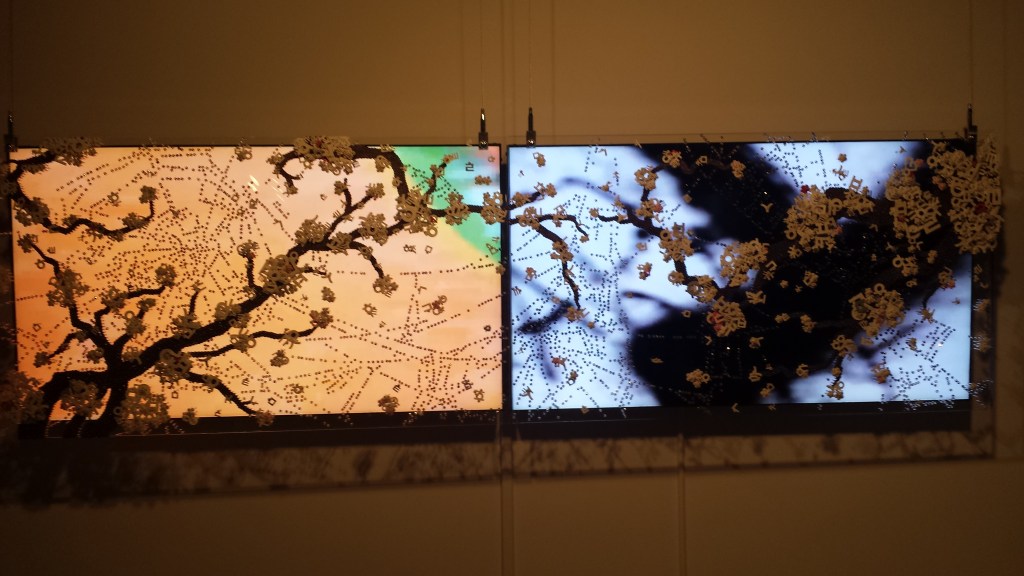
    Korean-born, internationally acclaimed installation artist Ran Hwang creates poetic pieces out of materials that are deployed in fashion industry. She uses handmade hanji buttons to create monumental pieces in installations that display iconic images. Her 9 feet tall work that displays Eiffel Tower and Triumphal Arch, required hours of securing handmade materials on plexiglas panel. The Beginning of the Bright piece, includes also Hangeul, the Korean alphabet. The work was displayed in Paris at the UNESCO headquarters to celebrate Hangeul’s designation as world cultural heritage. For Hwang, the lengthy hours of making the works means hammering each button on pins for approximately 25 times. The work is like meditative ritual similar to those of the zen-masters who concentrate on their practice for hours at a time.

    Ran Hwang, The Beginning of The Bright. Hanji Hangul Buttons, Pins on Plexiglas, 2015. 86.6 x 106.3 inches.

    Hwang creates three types of series, including, the plum blossoms, the birds and spiders, and architecture. The blossoms refer to ephemerality, to the endless circulation of life, which flowers depict when growing and falling. Architecture, like palaces, are symbols of power, which in the art also imply tragic events like invasions and deaths. The small creatures, birds and spiders, represent states between restriction and freedom, implying a constant flux and wandering in life. The artist states that all her work is in a state of fluidity. Nothing is fixed or permanent. The art evokes a dialogue between fleeting and the eternal.

    Ran Hwang, Contemplation Time, Paper Buttons, Beads, Pins on plexiglas, 2014.


    The combination of endurance and ephemerality is at the heart of my choice of using buttons as the primary medium. I hammer thousands of pins into wooden or acrylic panels with my bare hands. The process of creating these large installations is time-consuming, repetitive, and labor-intensive. Thus, the production process is a meditation for me to visualize a cosmological amount of time, and de-installation process is to end the cycle of life and start a new cycle.  Ran Hwang


    Ran Hwang: http://www.ranhwang.com

    Aimee Lee: http://aimeelee.net/

    Korean Cultural Center: http://www.koreanculture.org/
  • Janet Echelman’s 1.8

    Janet Echelman’s 1.8

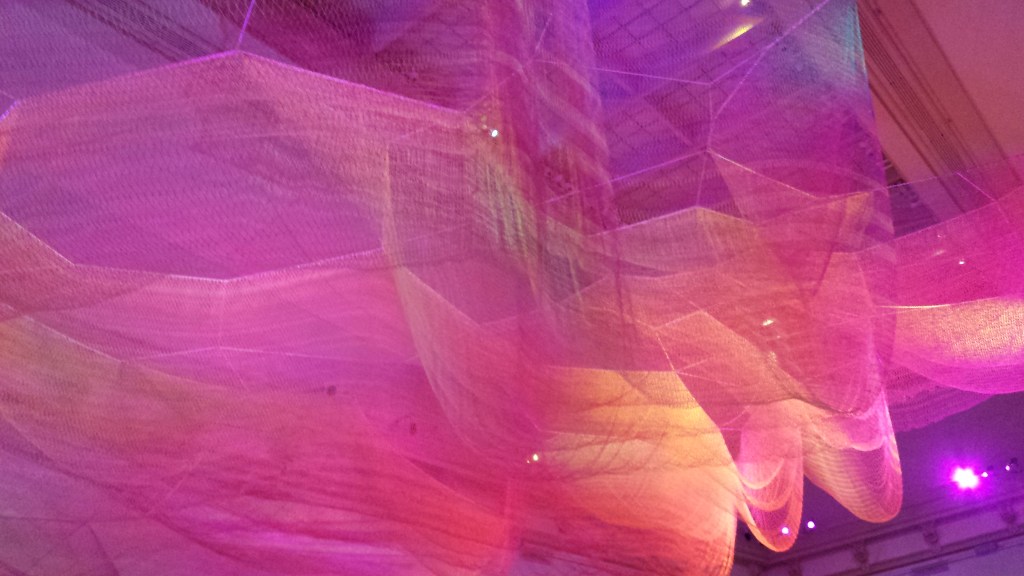
    WONDER exhibition celebrates the Renwick Gallery’s reopened spaces. The museum’s new statement is to bring the future of art into its program. It is now confronted with large-scale installations by nine artists. Janet Echelman is one of them with her piece 1.8, (2015). A large suspended net glides across the ceiling of the Grand Salon, which is located upstairs in the museum. The work is composed as knotted and braided fiber with programmable lighting and wind movement, above a printed textile flooring. Echelman’s sculptural installation speaks in relation to a map of energy released through the Pacific Ocean, when Japan’s Tohoku earthquake and tsunami took place on March 11, 2011.  The title of the work implies the 1.8 millionths of a second,  which measures the earthquake as it shifted the earth’s axis.

    Janet Echelman’s 1.8, 2015 from Firstindigo and Lifestyle on Vimeo.

  • Taryn Simon’s emerging bouquets

    Taryn Simon’s emerging bouquets

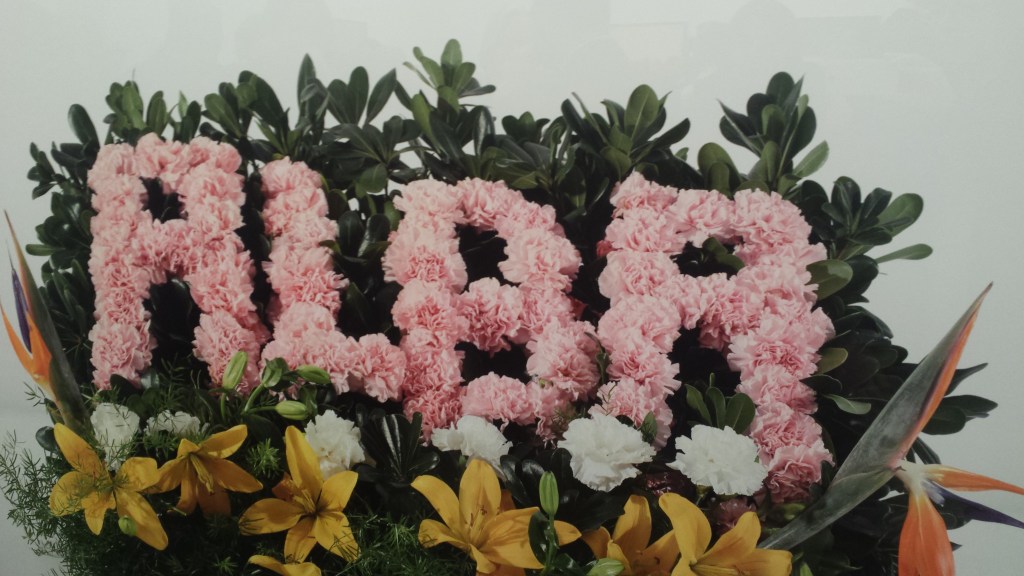
    At the Gagosian Gallery’s Chelsea location, opened a new exhibition around a theme of ‘impossible bouquet’.  Known for her challenging multidisciplinary photography, artist Taryn Simon has conducted extensive research for her current project Paperwork and the Will of Capital. The idea of ‘impossible bouquet’ refers to the Dutch 17th-century economy during which the market was booming. Simultaneously the birth of modern capitalism was reflected through the rich fauna of the era’s still-life paintings. The impossible bouquet is also an imagined bouquet. It includes flower pairings that cannot coexist in the natural world; the flowers are not blooming at the same time or they originate in different geographical locations. Today this economy has changed completely, when the global supply keeps bringing diverse specimen to the consumer’s market. The exhibition includes photographs of 36 bouquets formed as centerpiece and still-life. They gather thematically around 12 unique columnal sculptures, which also trace back to the fauna accumulated in the photography.  Next to the large photographs are their textual references connecting the arrangements to their sources.  The flower typologies in the artworks suggest real events that create the context for the exhibition.

    These flowers sat between powerful men as they signed agreements designed to influence the fate of the world. —Taryn Simon

    Taryn Simon

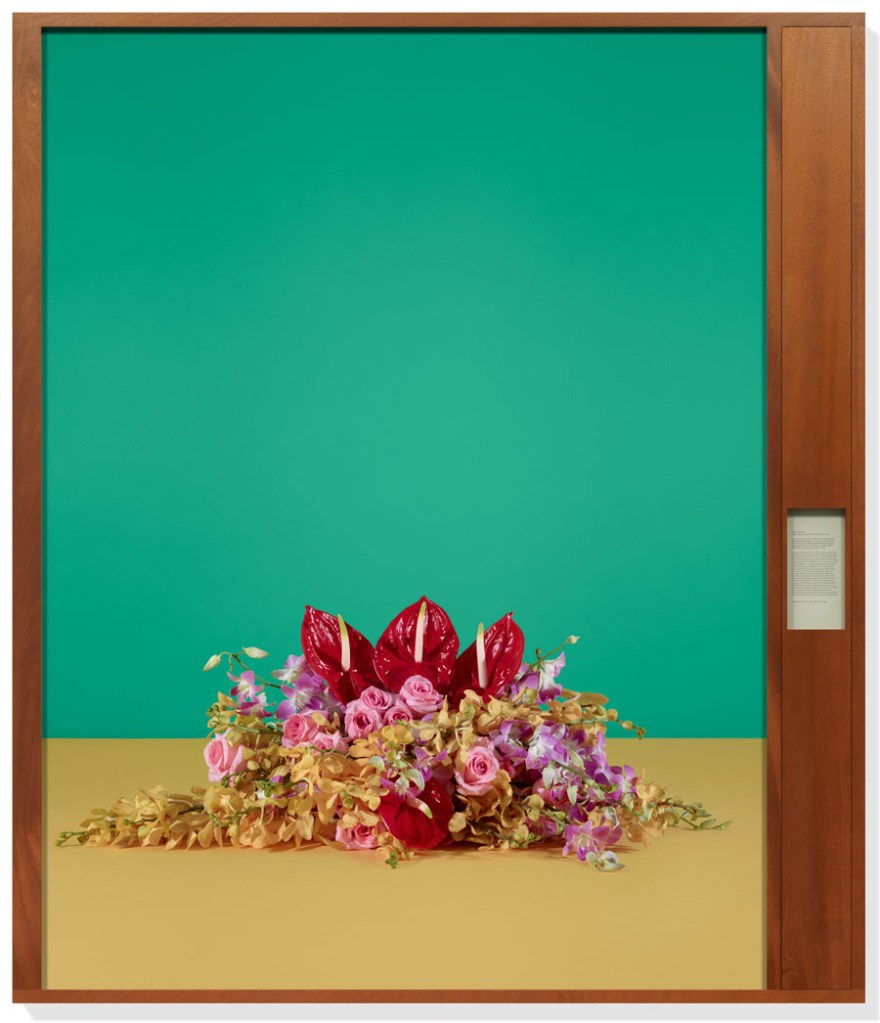
    Memorandum of Understanding between the Royal Government of Cambodia and the Government of Australia Relating to the Settlement of Refugees in Cambodia. Ministry of Interior, Phnom Penh, Cambodia, September 26, 2014, From the series Paperwork and the Will of Capital, 2015. Archival inkjet print in mahogany frames with text in windowed compartment on archival herbarium paper 85 × 73 1/4 × 2 3/4 inches framed. © Taryn Simon

    The exhibition is Taryn Simon’s first at the New York gallery. The sculptures displayed in the exhibition were previewed at the 56th Biennale di Venezia in 2015.  Now they appear  together with large-scale photographs that culminate as a complete body of work for the first time. During the process of making the photographs and sculptures, which navigate layered meanings, Taryn Simon worked together with a botanist, investigated archives, and benefited from 4000 different specimen to structure the process. Each specimen coming to the process was dried, pressed, and sewed into the herbarium paper. The artworks engage a level of communication as botanical collages, in a photographic form, and as pressed and preserved subject in the sculptures. The artist utilized George Sinclair’s nineteenth century horticultural study, which contains actual dried grass specimens.

    As much as the flowers have decorative power, the art speaks with full textual meaning. The textual references attached to the photographs and sculptures, describe diverse political agreements that semantically ground the ‘flower fantasies’ into realities, which touch lives. In the past, the bouquets staged world dramas. In their present artful context they contribute to breathing new air into the archives. The level of ignorance on the agreement’s impact on actual realities is communicated through the floral that is now taken care of. In the art it represents the colorful, palpable, and vivid side of the reality. Among the textual references, there are themes of global trading of goods, and examples of the attempts to access natural resources over national boundaries and geopolitical territories. There are strategic negotiations, where commercial value has weight over human capital, or it entirely suppresses environmental viewpoint. Often the signing table puts a full stop to development projects, social welfare and economic aid. For the artistic series, Simon studied archival photographs of official signings. She examined accords, treaties, and decrees that were drafted to influence systems of governance and economics. The subjects include nuclear armament, oil deals and diamond trading.

    The environmental challenge of the global flower distribution connects intimately to the exhibition narrative. Paperwork and the Will of Capital, implies the complications behind the global consumption. The underlying political themes communicate about environmental fragility. One of the flower narratives introduce a plan that was created around the Caspian Sea oil reserves, known as Baku-Tbilisi-Ceyhan Pipeline. As an outcome of this plan, Western nations would have more ideal access to the area’s natural resources and allude strategic presence in Central Asia.  The February 3, 2004 flower bouquet, testifying the signing of the finance package for constructing the BTC pipeline in Baku Azerbaijan, included: Baby’s Breath from Kenya; Dutch Iris from Netherlands; Israeli Ruscus; and Hybrid Tea Rose from Kenya.

    Another environmental flower arrangement relates to the 2014 agreement to conduct studies on the Grand Ethiopian Renaissance Damn, bringing in parties from Sudan, Ethiopia and Egypt to negotiations. The construction of the damn contests the neighboring countries, because the negotiations handle the water rights to the Nile. While still in the construction process, the dam will be Africa’s largest hydropower project taking massive segment of its infrastructure. The discussion challenges larger schemes linking back to the colonial history, which places Egypt as majority holder of the Nile’s water, when in reality Ethiopia, Kenya, Rwanda, Tanzania, and five other African states share access to its waters. The flowers present at the negotiations were: Gerbera from Netherlands; and Hybrid Tea Rose from Ethiopia.

    Can flowers change attitudes toward things and ideas? At least, the commerce between flowers from different territories and geographical locations stretches boundaries as we know them. Sometimes flowers travel further than people. Anthurium, Netherlands; Dendrobium, Thailand; Orchid Venezuela; and Hybrid Tea Rose, Kenya, were at present in the memorandum held to negotiate the status of refugees and asylum seekers to Australia. The negotiations took place in Cambodia on September 26, 2014. Australian refugees from the refugee center located on the Pacific Island of Nauru were to be transferred to Cambodia into a permanent resettlement. By shifting their refugee responsibilities elsewhere, the economically advantaged Australia signed to exploit one of the poorest nations in Southeast Asia.

    Highly conceptual thoughts embed the large photographic prints and their similarly intentional sculptures within a frame of time that scopes past and attains to preserve some for the future. It seems that the fragility of flowers echo past remnants, but more forcibly introduce newly fluid forms. The photographs speak through large canvas. They accumulate painterly softness through the backdrops, and the archival feel responds to the dimensionality of the bouquets. The floral appears as richly layered; the bouquets were photographed multiple times. Sometimes the setting stands still as if being part of a funeral setting, then the collage screams out from the mahogany frames. The bouquets are in a state of being and emerging.

    Artist website: http://tarynsimon.com/

    Taryn Simon: Paperwork and the Will of Capital

    February 18 – March 26, 2016

    Gagosian Gallery

    555 West 24th Street,

    New York

    http://www.gagosian.com/

    Hours: Tue–Sat 10-6